
In the competitive global outdoor apparel market, the difference between a high-performing product and a market failure often lies in the fabric selection. For procurement managers and product developers, choosing between Softshell, Hardshell, and 3-Layer Laminate is not just about aesthetics—it’s about balancing technical specifications with end-user requirements.
As a leading softshell fabric supplier and technical textile manufacturer, WildExplores understands that every SKU in your collection serves a specific purpose. This outdoor fabric comparison breaks down the hardcore physics and market positioning of today’s most essential performance materials.
1. Softshell Fabric: The Balance of Comfort and Protection
Softshell technology revolutionized the industry by offering a highly breathable, flexible alternative to traditional waterproof layers. Typically constructed from a tightly woven face fabric (often nylon or polyester) bonded to a fleece or brushed interior, softshells are designed for “active protection.”
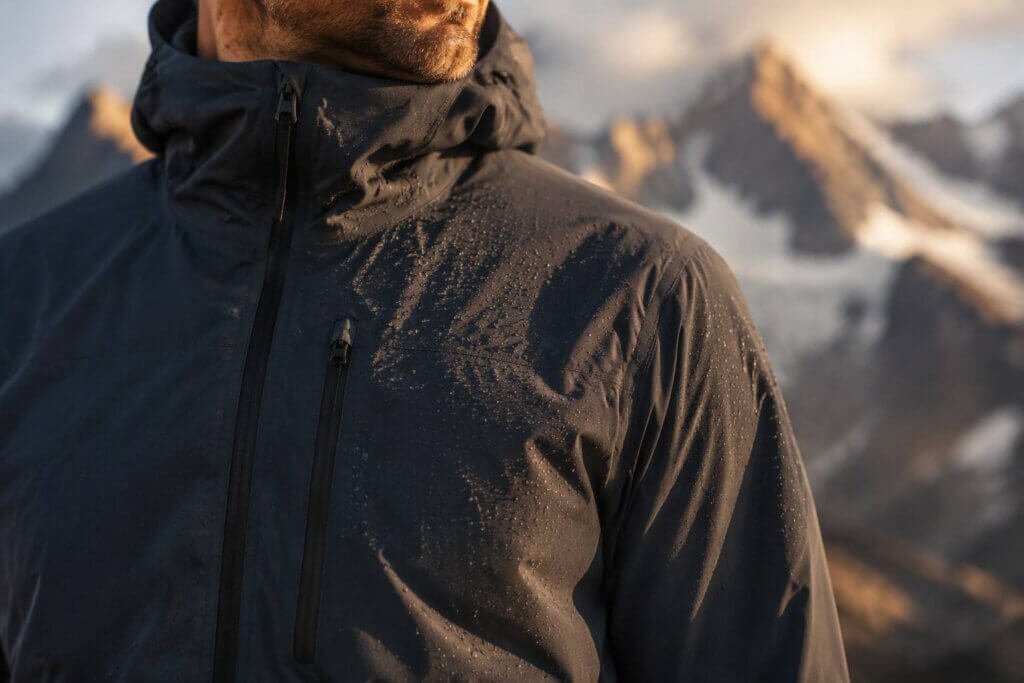
For brands developing tactical gear or trekking apparel, partnering with a specialized softshell fabric supplier is crucial for ensuring lot-to-lot consistency in stretch recovery and DWR (Durable Water Repellent) performance.
- Key Strengths: Superior breathability, four-way stretch, and wind resistance.
- Best Use Case: High-exertion activities (climbing, hiking) where moisture management is more critical than absolute waterproofing.
- Procurement Tip: Look for soft-shell fabric with advanced membrane bonding that doesn’t compromise the natural drape of the garment.
2. Hardshell Fabric: The Ultimate Weather Barrier
Hardshells are the “fortresses” of the outdoor world. Unlike softshells, they prioritize absolute protection against wind and heavy rain. They achieve this through a non-porous or microporous membrane (like TPU or PTFE) that prevents water molecules from entering while allowing microscopic vapor molecules to escape.
In the world of OEM outdoor fabrics, hardshells are the gold standard for alpine and extreme weather collections. They are often characterized by their “crunchy” hand feel and lack of stretch, although modern mechanical stretch hardshells are narrowing this gap.
- Key Strengths: 100% waterproof, windproof, and highly abrasion-resistant.
- Best Use Case: Skiing, mountaineering, and extreme storm protection.
3. 3-Layer Laminate: The Peak of Technical Engineering
When professional brands demand the highest durability-to-weight ratio, they turn to 3-layer laminate fabric. This construction bonds three distinct layers into a single textile:
- Face Fabric: The outer protective layer.
- Membrane: The functional heart that manages air and moisture.
- Backer: A fine mesh or tricot that protects the membrane from body oils and abrasion.
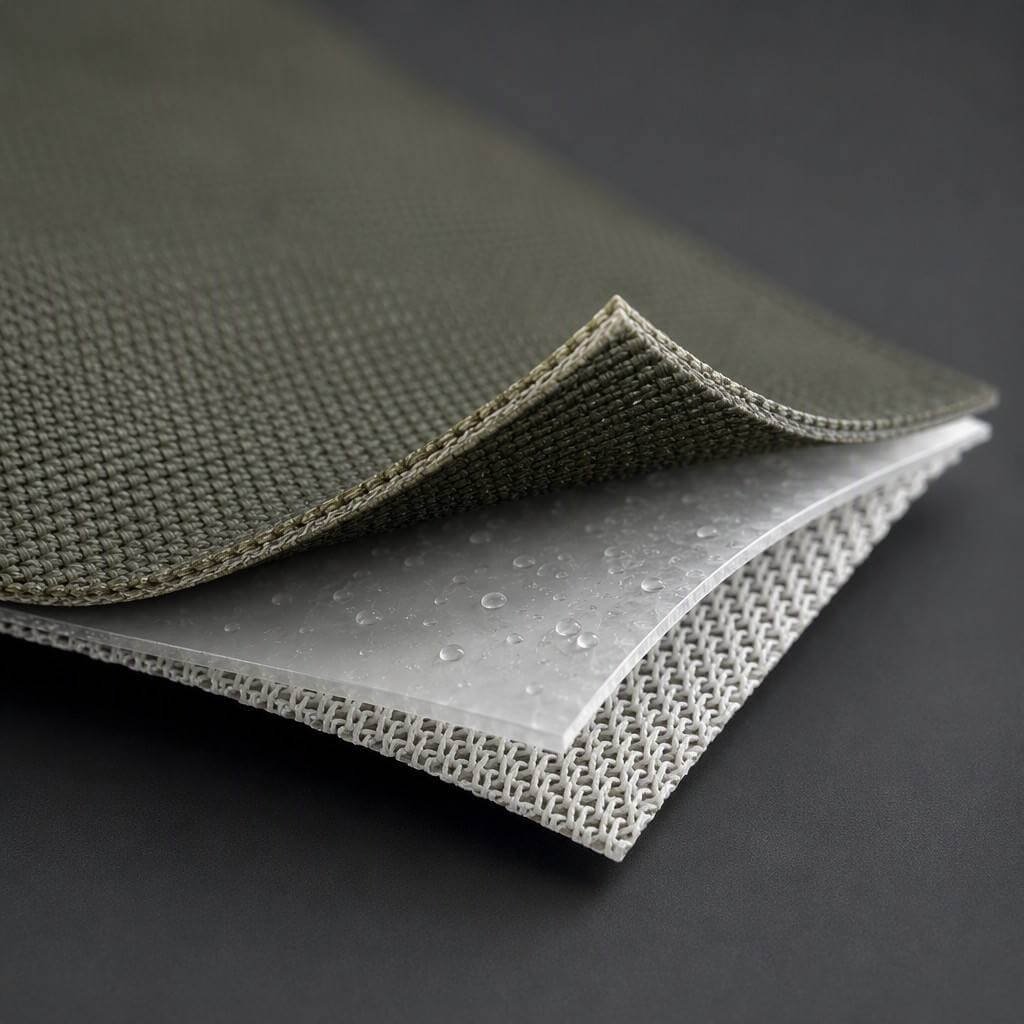
The 3-layer (3L) construction is significantly more durable than 2-layer or 2.5-layer alternatives because the membrane is never exposed to friction. For procurement managers, investing in high-quality 3L laminates reduces warranty claims and enhances the “premium” perception of the brand.
- Key Strengths: Maximum durability, no “clammy” feel against the skin, and high hydrostatic head ratings.
- B2B Benefit: 3L fabrics simplify the manufacturing process by removing the need for a separate hanging lining, reducing garment weight and assembly time.
4. Technical Comparison Matrix for Procurement Decisions
To assist in your next outdoor fabrics sourcing round, use the following matrix to align fabric choice with your product’s retail positioning:
| Feature | Softshell | Hardshell (2L/2.5L) | 3-Layer Laminate |
|---|---|---|---|
| Waterproofing | Water-resistant (DWR) | Waterproof | Absolute Waterproof |
| Breathability | Very High | Moderate | High to Very High |
| Durability | High (Abrasion) | Moderate | Extreme |
| Stretch | 4-Way / 2-Way | None to Mechanical | None to Mechanical |
| Weight | Heavier (due to lining) | Lightest | Mid-Weight |
5. Why Partnering with the Right OEM Fabric Manufacturer Matters
Choosing a fabric is only half the battle. The consistency of the lamination process, the quality of the TPU film, and the environmental compliance (PFC-free DWR) are what separate top-tier brands from the rest.
At WildExplores, we specialize in high-performance OEM outdoor fabrics. Whether you are looking for a reliable softshell fabric supplier for tactical jackets or a high-tech 3-layer laminate fabric for a new mountaineering line, our R&D team provides the technical documentation and testing data (A1, B1 ratings) required for global market entry.
Next Steps for Your Brand
Are you ready to elevate your technical collection? Our team can help you navigate the complexities of laminate technology and custom fabric development.
- Explore our full range: WildExplores Outdoor Fabrics Catalog
- Request Technical Data: Contact our procurement support team for swatches and lab reports.