
In the high-performance outdoor market, elasticity is no longer just a comfort feature—it is a functional requirement. Whether for alpine climbing trousers or tactical softshells, four-way stretch fabrics provide the dynamic mobility required for extreme environments. However, for B2B procurement managers, selecting the right stretch textile involves understanding the complex relationship between fiber blend, composite construction, and the TPU bonding process.
1. The Physics of Four-Way Stretch
Unlike two-way stretch fabrics, which only expand horizontally (weft-wise), four-way stretch materials incorporate elastane (Spandex/Lycra) in both the warp and the weft. This multi-directional elasticity allows the garment to move with the body’s musculature, reducing fabric stress and enhancing the user’s range of motion.
Key Specifications to Monitor:
- Elastane Percentage: Typically ranging from 5% to 15% for outdoor applications.
- Elastic Recovery Rate: The fabric’s ability to return to its original shape. For premium gear, a recovery rate of >95% after extension is the industry benchmark.
- Tensile Strength: Measuring the maximum stress the fabric can withstand before permanent deformation.
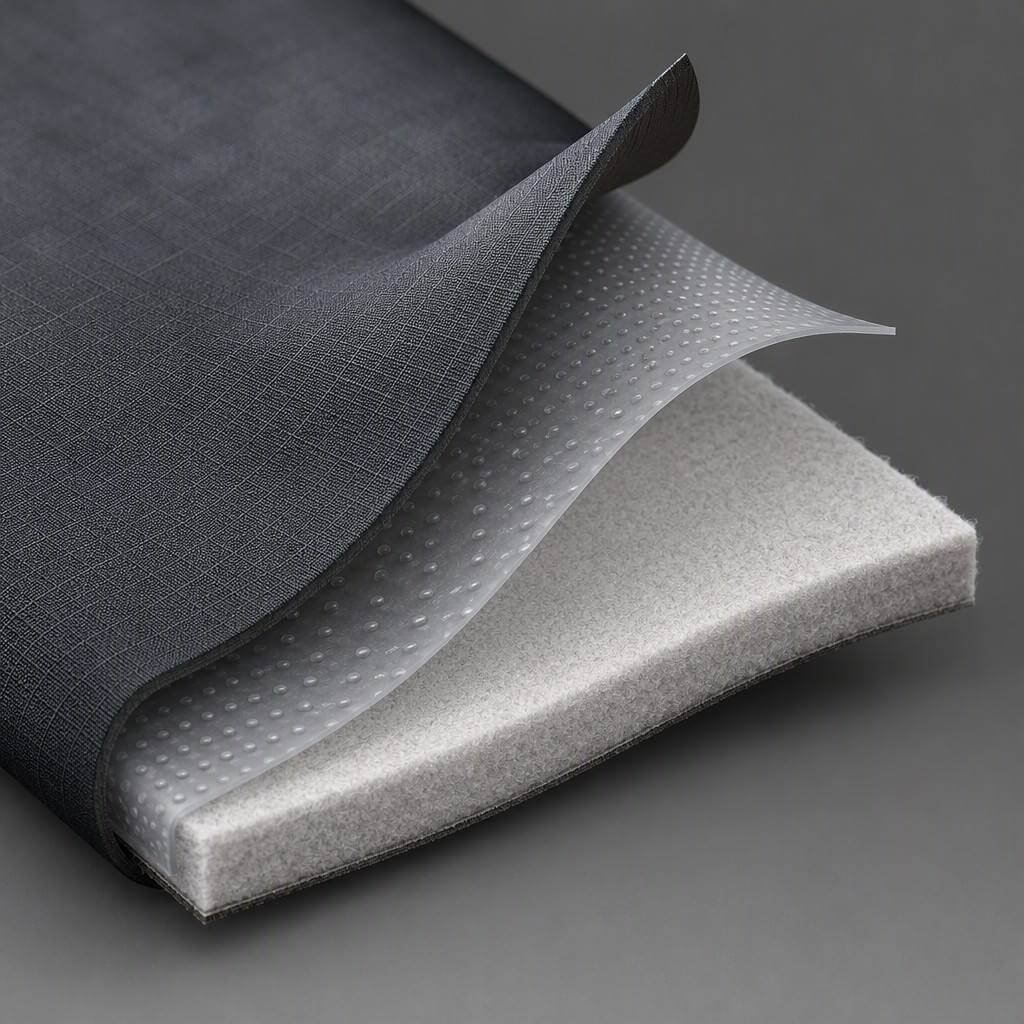
2. The Role of TPU Bonding in Composite Construction
For “softshell” applications, the stretch shell is often bonded to a functional membrane and a backer (fleece or tricot). The TPU bonding process (Thermoplastic Polyurethane) is critical here. TPU films provide the waterproof/breathable barrier while maintaining the shell’s natural elasticity.
At WildExplores, we utilize advanced hot-melt lamination technology to ensure that the bonding agent does not “stiffen” the fabric. A poorly executed bonding process can reduce a 15% stretch shell to an effective 5% stretch composite, defeating the purpose of high-elastane fibers.
3. Testing Standards: Ensuring Field Reliability
To guarantee that four-way stretch materials meet global brand standards, they must undergo rigorous ASTM and ISO testing:
- ASTM D3107: Standard Test Methods for Stretch Properties of Fabrics Woven from Stretch Yarns.
- ASTM D751: Testing for coated and laminated fabrics (Bursting strength and seam strength).
- ISO 12947 (Martindale): Abrasion resistance testing, ensuring that the friction of movement doesn’t cause pilling or fiber breakage in the elastane core.
4. B2B Procurement Advice: Sourcing for Consistency
When sourcing for a new collection, B2B buyers should look beyond the initial hand-feel. Consistency in stretch modulus across different dye lots is the biggest challenge in mass production.
WildExplores recommends:
- Verify the Lamination Method: Ensure the TPU film used is “Breathable Grade” to avoid a clammy microclimate inside the garment.
- Request Lot-to-Lot Test Reports: Specifically for shrinkage and elastic recovery.
- Analyze the Composite Structure: For winter gear, a 3-layer composite (Shell + TPU + Microfleece) provides the best thermal-to-stretch ratio.