
Nylon fabric is a practical choice for outdoor apparel when a product needs a lightweight woven base with a useful balance of durability, packability, movement, and finishing options. The correct material is not selected by the word “nylon” alone. Outdoor buyers should compare fiber composition, denier, weave, GSM, usable width, stretch behavior, surface finish, coating, and test requirements against the final garment.
This guide is written for apparel brands, garment manufacturers, and sourcing teams selecting nylon fabric for jackets, windbreakers, hiking trousers, sportswear, sunscreen coats, and related outdoor products. It uses the published ExploreWilderness catalog references for 39 GSM lightweight nylon, 87 GSM 40D nylon ripstop, and 109 GSM stretch nylon. Those product references are useful starting points, but the final specification, test method, availability, and commercial terms must be confirmed for each project.
What Should a Nylon Fabric Specification Include?
A nylon fabric specification should identify the material well enough for a buyer to request the same sample, quotation, and production reference. “Nylon fabric” is too broad for a purchase order because two fabrics with the same fiber name may have different weights, constructions, hand feels, and weather performance.
At minimum, record the following fields:
| Specification | Why it matters to the buyer |
|---|---|
| Fiber composition | Confirms whether the fabric is 100% nylon or a blend with elastane or another fiber. |
| Denier or yarn information | Helps describe the yarn size and intended weight or construction, but does not replace finished GSM. |
| Weave and construction | Identifies plain weave, twill, ripstop, mechanical stretch, or another structure. |
| Finished GSM | Helps compare weight, coverage, drape, and packability. |
| Finished and usable width | Affects marker planning, cutting yield, and cost. |
| Stretch and recovery | Defines movement and fit requirements instead of relying on the word “stretch.” |
| Finish or coating | Separates DWR, water resistance, coating, lamination, anti-static, and other treatments. |
| Testing and tolerance | Converts qualitative claims into measurable acceptance criteria. |
| Product identity | Links the swatch, model number, quotation, and purchase order. |
ExploreWilderness’ published nylon references show why this level of detail matters. Model YYSNT021 is listed as a 100% nylon woven fabric with an 87 GSM reference, ripstop construction, and approximately 150 cm usable width. The site also lists separate 39 GSM 100% nylon woven references at 152 cm listed width, and a 109 GSM 100% nylon stretch reference at 150 cm width. These are different development directions, not interchangeable SKUs.
How Does Nylon Fabric Perform in Outdoor Clothing?
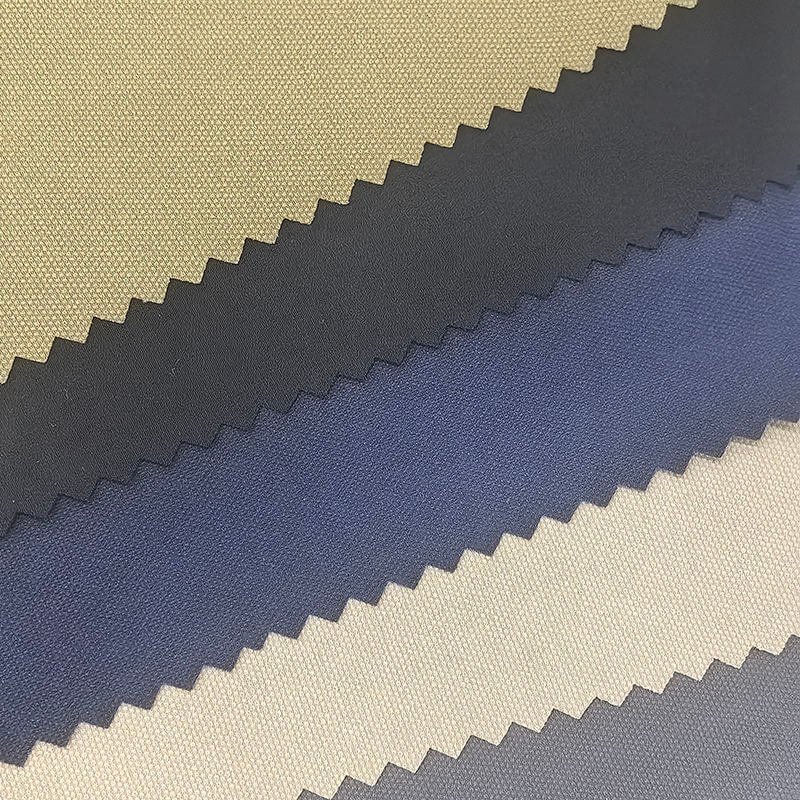
Nylon is often considered for outdoor garments because it can support a useful strength-to-weight balance and can be engineered into lightweight, ripstop, stretch, coated, or finished constructions. Its performance still comes from the complete textile system. Fiber content alone does not guarantee abrasion resistance, breathability, waterproofness, quick drying, or a particular service life.
Weight and packability
GSM is one of the first numbers buyers compare. A lower GSM can help reduce garment weight and bulk, which is useful for summer outerwear, packable jackets, and sunscreen coats. However, lower weight may also change opacity, tear behavior, hand feel, seam performance, and coverage. A lightweight fabric is not automatically the best fabric; it is appropriate only when the garment brief supports it.
The 39 GSM nylon references on ExploreWilderness are positioned for ultra-lightweight summer outdoor and sunscreen-jacket concepts. Before approval, buyers should check the actual sample for drape, transparency, sewing behavior, pocket construction, and the required level of protection. The listed GSM and width should be treated as public product references until the supplier confirms the project specification and tolerance.
Tear and abrasion performance
Outdoor garments experience rubbing and localized loads at elbows, knees, seat panels, pocket openings, pack-contact zones, and seam points. Ripstop structure, yarn choice, weave density, finishing, and garment construction can all affect how a fabric behaves under those conditions.
A buyer should request the relevant tear, tensile, abrasion, or seam-slippage information for the intended application. The target for a lightweight sunscreen jacket may be different from the target for a hiking trouser or workwear shell. Do not turn a general description such as “tear resistant” into a numerical claim unless the value and test method have been supplied and approved.
Moisture management and breathability
A nylon fabric may be suitable for breathable outdoor apparel, but “breathable” is not a single universal measurement. Fabric density, air permeability, coating, lamination, moisture vapor transmission, garment ventilation, and environmental conditions all affect comfort.
For technical development, specify whether the project needs air-permeability data, MVTR, evaporative resistance, or another agreed test. The existing ExploreWilderness fabric breathability guide explains why buyers should select the metric before asking for a pass/fail result.
Stretch and recovery
Nylon fabric may stretch because of a mechanical construction or because it contains elastane. These behaviors are not identical. A buyer should record the stretch direction, extension percentage, recovery expectation, conditioning state, and tolerance. If a product is described as four-way stretch, confirm how that description is measured for the selected fabric.
Which Type of Nylon Fabric Fits the Garment?
The best nylon fabric depends on the garment’s use, not on a general ranking of fabric types. The following comparison gives a practical starting point for sourcing discussions.
| Nylon fabric direction | Typical development use | Main advantages to evaluate | Main questions before approval |
|---|---|---|---|
| 39 GSM lightweight woven nylon | Summer outdoor jackets and sunscreen coats | Very low fabric weight, packability, and light hand feel | Is the coverage, opacity, tear behavior, and sewing performance sufficient? |
| 40D nylon ripstop, around 87 GSM | Lightweight shells, sportswear, trousers, and outdoor garments | Reinforced grid, controlled weight, and versatile woven construction | What are the tear, stretch, water, color, and width tolerances? |
| 100% nylon stretch, around 109 GSM | Sportswear, trousers, dresses, and light outdoor garments | Movement and a medium-light woven reference | What is the stretch direction, recovery, finish, and test basis? |
| Coated or laminated nylon | Rainwear and technical outer layers | Potentially stronger weather-barrier performance | Which hydrostatic-head, breathability, seam, and coating requirements apply? |
These categories are not performance guarantees. They are sourcing directions that should be narrowed through a technical brief and physical sample.
Nylon ripstop fabric
Ripstop fabric uses a reinforcing grid within the woven construction. ExploreWilderness’ 40D nylon ripstop guide identifies Model YYSNT021 as a plain-dyed 100% nylon woven reference with 87 GSM and approximately 150 cm usable width. The guide positions the fabric for garments, sportswear, dresses, and trousers while stating that exact performance ratings, testing, color, and commercial terms require confirmation.
Lightweight nylon fabric
Lightweight nylon can be suitable for packable jackets, windbreakers, summer coats, and sunscreen garments. The buyer should judge it as part of a garment system: lining, seams, pockets, closures, reinforcement panels, and care conditions may change the practical result. ExploreWilderness’ 39 GSM nylon buyer guide records two separate 39 GSM product listings and advises buyers to keep their SKUs, sample records, and inquiries separate.
Stretch nylon fabric
Stretch nylon is useful when movement or fit is part of the design brief. ExploreWilderness lists a 100% nylon 109 GSM stretch fabric for garment and sportswear applications. The page includes water-resistant, quick-dry, breathable, anti-pill, and anti-pull descriptors. Those terms should be treated as catalog language until the buyer and supplier agree on testing and acceptance criteria.
Is Nylon Fabric Waterproof?
Nylon fabric is not automatically waterproof. Water performance may come from the surface finish, coating, membrane, construction, seams, closures, and garment assembly. A fabric can have water-repellent behavior at the surface without providing a continuous waterproof barrier under sustained pressure.
This distinction is important when a product page uses “water resistant” or “waterproof.” Those words do not by themselves provide a hydrostatic-head number, test standard, conditioning method, or pass/fail result. For a rain shell, the buyer should define the complete weather-protection system rather than evaluating the face fabric alone.
A project brief should distinguish among these requirements:
- Surface water repellency: how water wets or beads on the face of the fabric;
- Water resistance: performance under a specified exposure or pressure condition;
- Waterproof barrier: resistance to hydrostatic pressure under an agreed method;
- Garment waterproofness: fabric, seams, closures, hood, cuffs, and construction working together.
The ExploreWilderness hydrostatic-head guide explains how to define the target, test method, condition, and acceptance rule. Its DWR finish guide addresses surface-finish specification separately. ASTM D3393 and ASTM D7017 can also provide relevant technical context, but the buyer must select the method that matches the actual fabric and garment construction.
How Should Buyers Sample Nylon Fabric?
Sampling should answer more than whether the fabric looks attractive on a swatch. The purpose is to confirm that the material is the correct product reference and behaves appropriately in the intended garment.
Use this sequence:
- Choose one product identity. Record the exact model number, SKU, product title, and source URL. Do not merge two similar listings into one specification.
- Send the garment brief. State the garment type, season, target market, color, expected abrasion, movement, finish, and approximate volume.
- Confirm the public specification. Check composition, construction, GSM, width, and any listed feature against the supplier’s current response.
- Ask for missing technical data. Request the test method and result for each requirement that affects a product claim or quality decision.
- Evaluate the physical sample. Review hand feel, drape, opacity, surface, stretch direction, sewing, seam behavior, and compatibility with the pattern.
- Approve color and finish. Keep the approved lab dip, swatch, or finish sample tied to the same model and project file.
- Record the acceptance basis. Before bulk production, document tolerance, inspection method, test method, and the person responsible for approval.
A sample approval does not automatically confirm the current price, MOQ, stock status, lead time, certification, or bulk-batch result. Those commercial and production items need a separate confirmation in the quotation or purchase process.
How Can a Nylon Fabric Supplier Support B2B Buyers?
A reliable supplier response should connect four things: the physical sample, the technical specification, the test information, and the commercial quotation. If these refer to different models or batches, the buyer cannot make a controlled comparison.
Before requesting a quotation, prepare a concise inquiry with the following information:
- Target garment and end use;
- Required composition or acceptable blend range;
- Preferred denier, weave, ripstop, or stretch direction;
- Target GSM, usable width, and tolerances;
- Color standard and lab-dip requirement;
- DWR, coating, lamination, or other finish;
- Tear, tensile, abrasion, pilling, colorfastness, shrinkage, breathability, or water tests;
- Sample quantity, target order volume, destination market, and desired delivery window;
- Required compliance documents or customer standards.
ExploreWilderness presents itself as an outdoor apparel supplier and technical fabric manufacturer, with product categories covering functional technical fabrics and outdoor sportswear fabrics. Buyers should still verify each project’s current specification, availability, and commercial terms through direct inquiry. This approach is more useful than treating a general catalog page as a guaranteed production promise.
Nylon Fabric Buyer’s Checklist
Before approving an outdoor nylon fabric, confirm each item below in writing:
- The article or product page links to the correct current product reference;
- The sample label, SKU, quotation, and technical sheet identify the same fabric;
- Composition, weave, denier, GSM, and usable width are recorded;
- Stretch direction and recovery are defined when movement is required;
- “Breathable,” “quick-dry,” “water-resistant,” and “waterproof” claims have a test basis;
- DWR is separated from coating, lamination, and hydrostatic-head performance;
- Color, finish, care, shrinkage, and colorfastness requirements are documented;
- The approved swatch or lab dip is stored with the project file;
- MOQ, price basis, lead time, stock or made-to-order status, and inspection terms are confirmed;
- The final garment construction has been considered, including seams and closures.
This checklist gives the article a practical purpose for the site’s B2B audience. It also helps readers move from a broad search such as “nylon fabric” to a concrete sourcing decision.
Nylon Fabric FAQ
Is nylon fabric suitable for outdoor apparel?
Nylon can be suitable for outdoor apparel when the selected construction matches the garment’s weight, durability, movement, weather, and care requirements. Compare the complete specification rather than choosing by fiber name alone.
What is 40D nylon ripstop fabric used for?
40D nylon ripstop can be evaluated for lightweight jackets, windbreakers, sportswear, trousers, and other outdoor products where a reinforced woven grid and controlled fabric weight are relevant. Confirm the actual GSM, width, tear performance, stretch, finish, and intended use for the selected model.
Is lightweight nylon fabric waterproof?
Not necessarily. Lightweight nylon may have a water-repellent finish, but waterproofness normally depends on a defined coating, membrane, construction, or garment system. Ask for the applicable method and acceptance result.
What does GSM mean in nylon fabric?
GSM means grams per square meter. It is a finished fabric weight reference that helps buyers compare bulk and coverage. It does not independently determine strength, breathability, waterproofness, or quality.
What should I ask a nylon fabric supplier?
Ask for the exact model, composition, construction, GSM, usable width, finish, color route, performance test basis, MOQ, price, lead time, sample terms, and bulk acceptance conditions. Keep similar SKUs separate in the inquiry and purchase records.
Further Reading and Technical References
- ExploreWilderness: 40D Nylon Ripstop Fabric Supplier Guide
- ExploreWilderness: 39 GSM Nylon Sunscreen Fabric Buyer’s Guide
- ExploreWilderness: Fabric Breathability and MVTR/Ret Specification
- ExploreWilderness: Hydrostatic Head and Waterproof Rating Specification
- ExploreWilderness: DWR Finish Specification
- Textile Exchange: Nylon
- ASTM D3393: Coated Fabrics—Waterproofness
- ASTM D7017: Water-Resistant Rainwear